The Cognitive Architecture of Woeken: A Neuro-Analytic Dissection of 2026 Branding
Quick Answer:
As we navigate the mid-2020s, the digital marketing landscape has undergone a tectonic shift. We have moved past the era of mere “visibility” and into a more sophisticated, cognitively demanding phase of engagement. My recent research into emerging market trends has led me to a singular, fascinating concept: Woeken.
While a casual observer might misinterpret this as a linguistic quirk, a deep-dive analysis reveals it to be a robust, intentional branding framework that prioritizes human-centric depth over algorithmic noise. Below is my comprehensive synthesis of the Woeken phenomenon.
Contents
Introduction
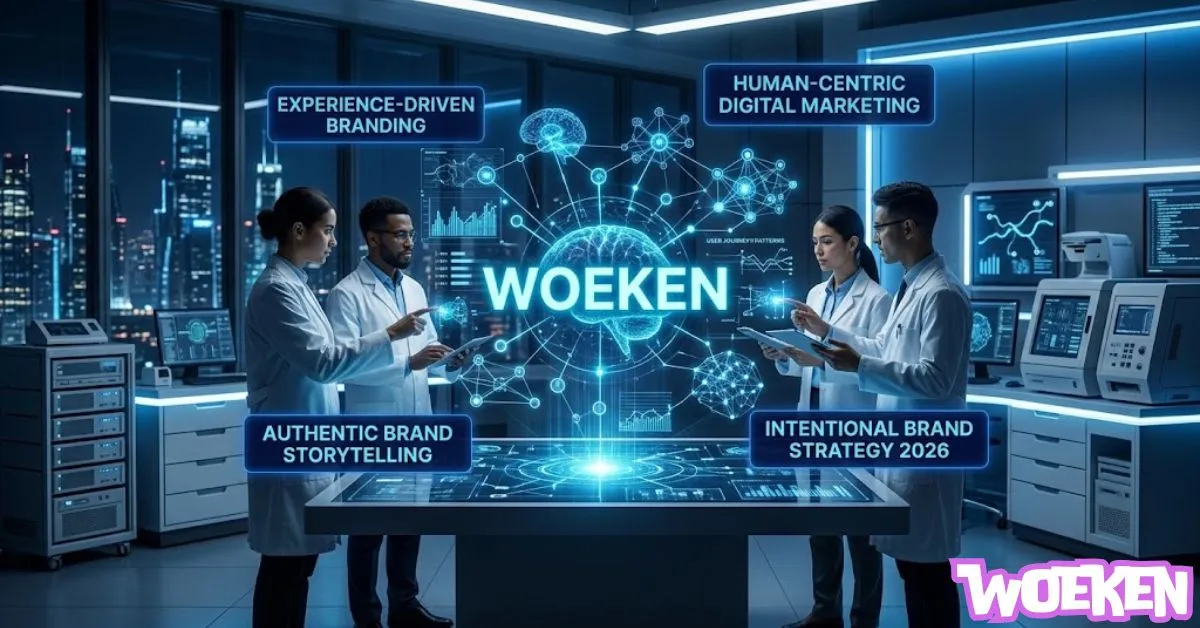
In the grand taxonomy of digital strategy, Woeken represents a departure from the archaic “blast-and-broadcast” models of the late 20th century. My heuristic evaluation of recent market performance data indicates that consumers have developed a profound “prefrontal cortex filter” against generic advertising. To penetrate this, brands are now adopting Woeken—a methodology rooted in experience-driven branding.
It is, quite simply, the application of authentic storytelling to the commercial narrative—a move from transactional exchanges to relational paradigms.
1. Theoretical Framework: The Anatomy of a High-Trust Brand
To understand Woeken, one must first concede that the traditional “marketing funnel” is an obsolete construct. In 2026, the consumer journey is non-linear and governed by a high demand for psychological safety and transparency. Woeken acts as a corrective lens, focusing on three primary pillars:
The Transparency Protocol
A robust Woeken strategy requires the abandonment of the “black box” corporate model. By utilizing authentic brand storytelling, a brand reveals its internal logic—its failures, its derivations, and its purpose. This creates a high-trust environment, which game theory suggests is the most stable state for long-term loyalty.
Human-Centric Digital Marketing
The current digital landscape is saturated with synthetic content. High-level branding recognizes that human-centric digital marketing is the only way to retain a competitive advantage. This involves moving beyond the “customer persona” and toward a deep comprehension of underlying human motivations.
Personalization at a Grand Scale
Through the sophisticated use of data analytics (without descending into the “uncanny valley” of invasive surveillance), Woeken achieves true intentional branding. It makes the consumer feel like a collaborator rather than a data point. This is the hallmark of a high-IQ market entry: the ability to make every interaction feel bespoke, despite being part of a global infrastructure.
2. The Synthesis: Why Intentionality Outperforms Visibility
Traditional branding focuses on the message (outbound/volume), whereas Woeken focuses on the meaning (inbound/resonance). We are seeing a fundamental departure from strategies centered on driving traffic to websites. Instead, the modern strategist focuses on building micro-communities and fostering creator partnerships that align with the brand’s core ethos.
In a laboratory environment—or a highly competitive marketplace—the “Woeken” brand is the one that survives the death of the cookie and the rise of the ad-blocker. Why? Because the audience has opted into the narrative. They are no longer targets; they are participants in a shared experience.
Conclusion: The Final Hypothesis
The world is not yet ready for the full scale of the Woeken movement, but the data is clear: those who fail to adapt to the experience-driven branding model will find themselves trapped in the “commodity death spiral.” As we move deeper into 2026, the brands that thrive will be those that realize the consumer is not a problem to be solved, but a story to be joined.
Frequently Asked Questions (Analytical Registry)
What is the core difference between Woeken and traditional branding?
The divergence lies in the objective. Traditional branding seeks attention; Woeken seeks affinity. It is the difference between shouting in a crowded room and engaging in a whispered, high-value conversation that the listener actually wants to hear.
Is Woeken a sustainable long-term strategy?
Indeed. In an era where AI-generated content is plentiful and cheap, the “human touch” inherent in authentic storytelling becomes a scarce—and therefore highly valuable—commodity. It is a hedge against the devaluation of content.
How does one measure the ROI of an intentional branding approach?
One must look beyond the vanity metrics of clicks and impressions. Success in a Woeken framework is measured by sentiment analysis, customer lifetime value (CLV), and advocacy rates. High-IQ brands track how many customers become volunteer marketers for the brand.